About us

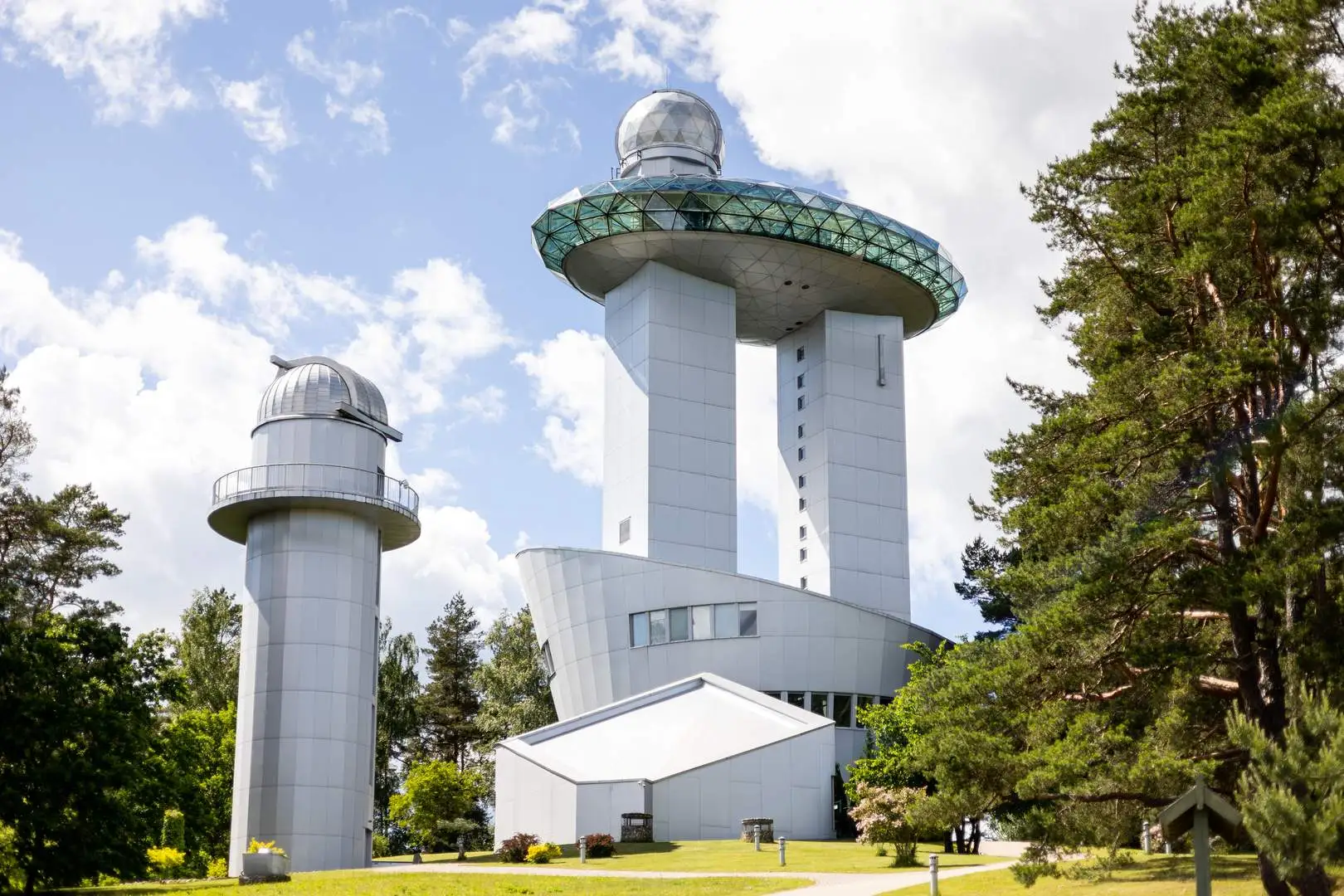
The Lithuanian Museum of Ethnocosmology is a unique place that brings together astronomy, ethnic culture, and the human relationship with the Cosmos. Here, the story is told not only about celestial bodies, but also about how people throughout the centuries have understood their place in the Universe.

Our history

1969
1970
1978
15 March, 1990
September 17, 1997
2007–2008
Today
The Beginning of the Molėtai Observatory

A site in the hills of Kulionys village is selected, and the construction of the observatory begins.

The Idea of Ethnocosmology Is Born

Dr. Gunaras Kakaras and Dr. Libertas Klimka begin to connect astronomy with the Lithuanian ethnic worldview – the concept of ethnocosmology starts to take shape.

The First Public Museum Opens

At the observatory, marking the 125th anniversary of the Vilnius University Observatory, a public museum is opened featuring the first ethnographic exhibits.

The Ethnocosmology Museum Is Established

By decision of the Academy of Sciences, the Museum of Ethnocosmology is established as a separate institution.

The Museum Telescope Begins Operation

A telescope, received as a gift from the Lithuania–Italy Foundation, is put into operation.

The Major Reconstruction of the Museum

An EU Structural Funds–financed project is implemented, the infrastructure is renovated, and a modern telescope is acquired.

A Living Center of Science and Culture

The Lithuanian Museum of Ethnocosmology brings together science, culture, and experience, inviting people to explore their connection with the Universe.

Museum Concept

The Lithuanian Museum of Ethnocosmology is the first and the only museum of its kind in the world, dedicated to exploring the relationship between humanity and the Cosmic world.

Ethnocosmology is not only about astronomy. It is the whole system of connections that link us with the Universe:

  • Ethnic and spiritual: How the Cosmos is reflected in the heritage of our nation – in mythology, rituals, and religions.
  • Cognitive and pragmatic: Scientific achievements, astrophysics, and humanity’s physical exploration of the Universe.
  • Emotional and ontological: The search for the meaning of human existence, expressed through art and visions of the future.

Our goal is, through archaic heritage, modern science, and direct observations through telescopes, to help every visitor feel that we are an inseparable part of the Universe. We raise questions about the origin of life, extraterrestrial intelligence, and the future of civilization, encouraging the development of a broader worldview.

We are a product of cosmic evolution, and our future will always depend on the laws of the Universe.