Meteorites: Visitors from Space

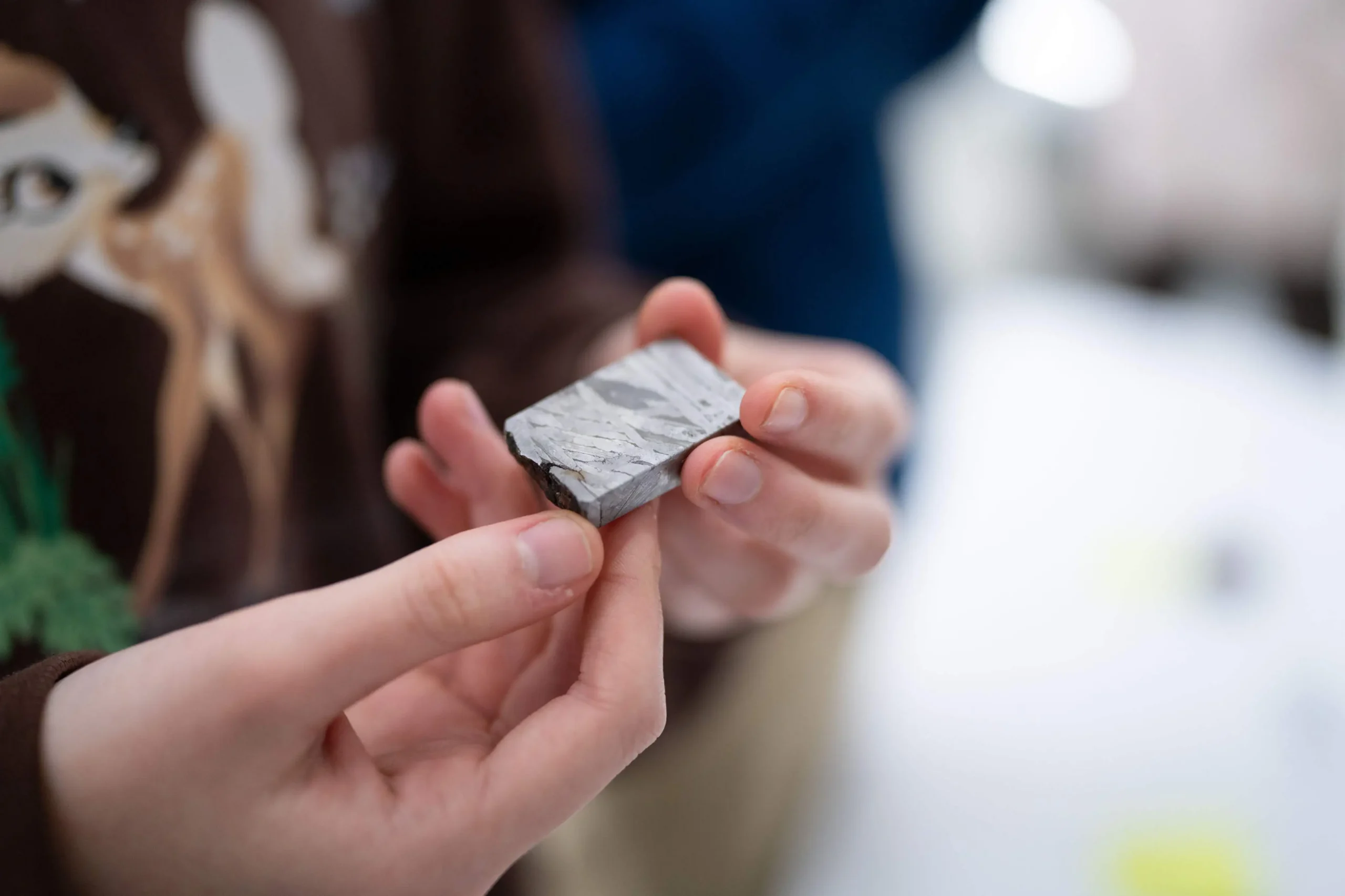
Participants are introduced to how meteorites reach Earth and how they are classified. Together with the educator, they explore meteorites both theoretically and practically by examining real samples of different types. Participants learn which meteorites most commonly fall to Earth and discover intriguing facts about famous meteorite falls worldwide.

Special attention is given to meteorites that have fallen in Lithuania. By observing real samples, participants practice distinguishing different meteorite types. Micrometeorites are also discussed—tiny space particles found in our everyday environment.

Duration: 45–60 minutes. Group size: Up to 30 participants.
Select a timeslot

2026 March 30 - 5 d.
30
M
31
T
1
W
2
T
3
F
4
S
5
S
Language (2)
Participants
This day is calm in the cosmos – please choose another date.

You might also like

No events on the selected date
A unique opportunity to observe processes taking place on the surface of our nearest star—the Sun—using dedicated solar telescopes. Participants review the latest data from solar observation satellites and learn about solar activity cycles and aurora phenomena. Duration: 45–60 minutes. Group size: Up to 18 participants.
No events on the selected date
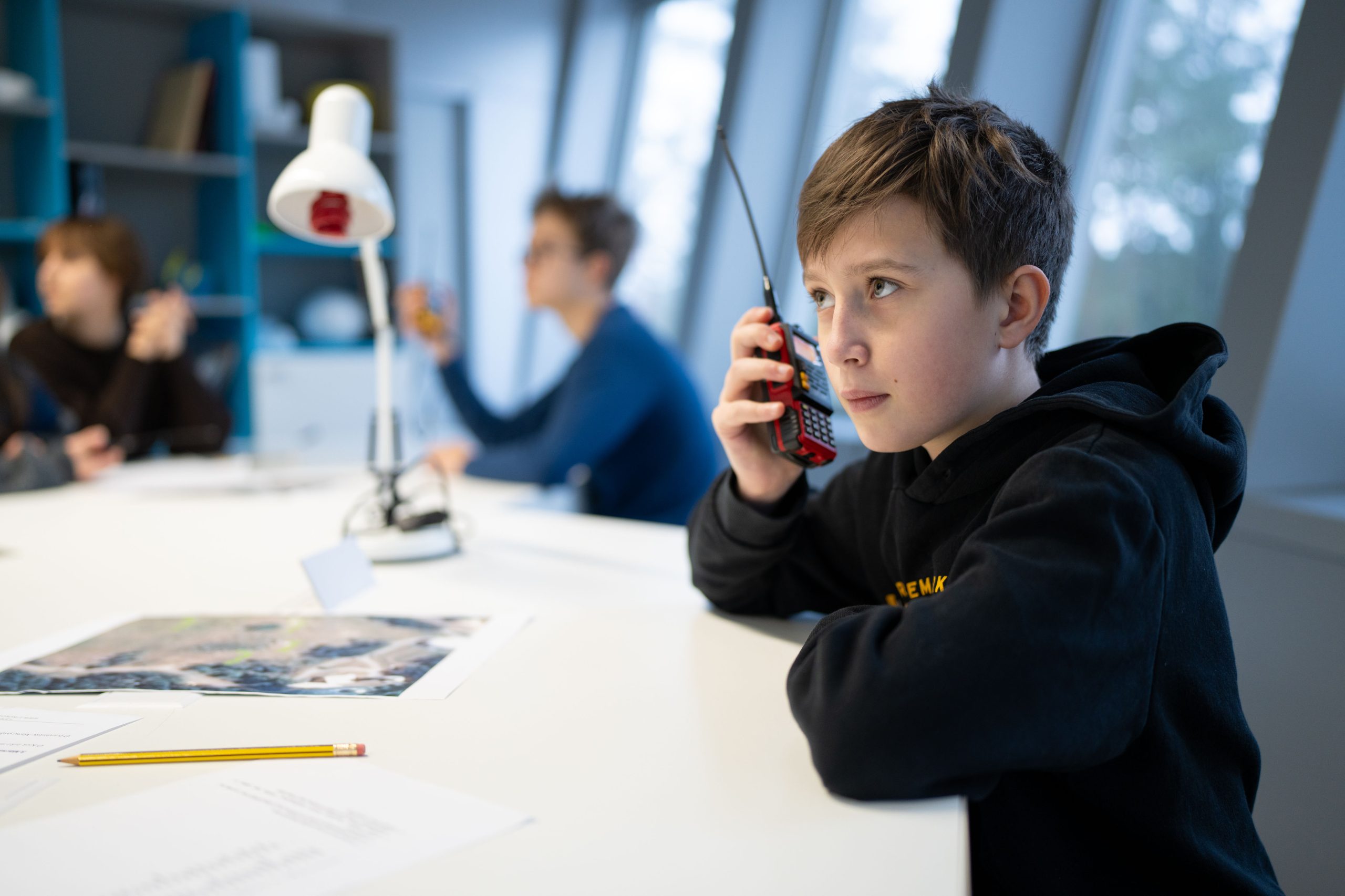
Participants learn how to communicate using radio walkie-talkies. The programme takes place both indoors and outdoors, with tasks involving the Solar System model in the museum’s outdoor exhibition. Participants are introduced to the principles of electromagnetic wave propagation and test radio communication equipment. Working in teams, “Mission Control” remains in the classroom while “astronauts” explore the outdoor exhibition to locate information, communicating via radios. The programme concludes with a group discussion and task review. Duration: 45–60 minutes. Group size: Up to 30 participants.
No events on the selected date