At the 40 cm Telescope: Night Sky Observations

Night-time observations are among the most atmospheric and memorable experiences at the Lithuanian Museum of Ethnocosmology. Although clear skies are relatively rare, those nights when we can gaze into the depths of space with our own eyes are truly special.

It is important to note that the night sky is constantly changing; therefore, objects seen by your acquaintances or by us may not necessarily be visible on the night you choose. Observations through the museum’s 80 cm and 40 cm telescopes vary continuously, reflecting the celestial objects visible in that season and depending precisely on the hour of observation. Even so, the experience always leaves a lasting impression—or at least vivid memories of the moving observatory dome and a remarkable instrument for exploring the sky. The programme may be delivered in English upon request; however, availability cannot be guaranteed.

This agile telescope allows excellent views even of objects that have just risen above the horizon.

The telescope tower can accommodate up to 18 visitors at a time.

Please note that access to this telescope tower is by stairs only, as there is no elevator.

Night tours may be delivered in English upon request; however, availability cannot be guaranteed.
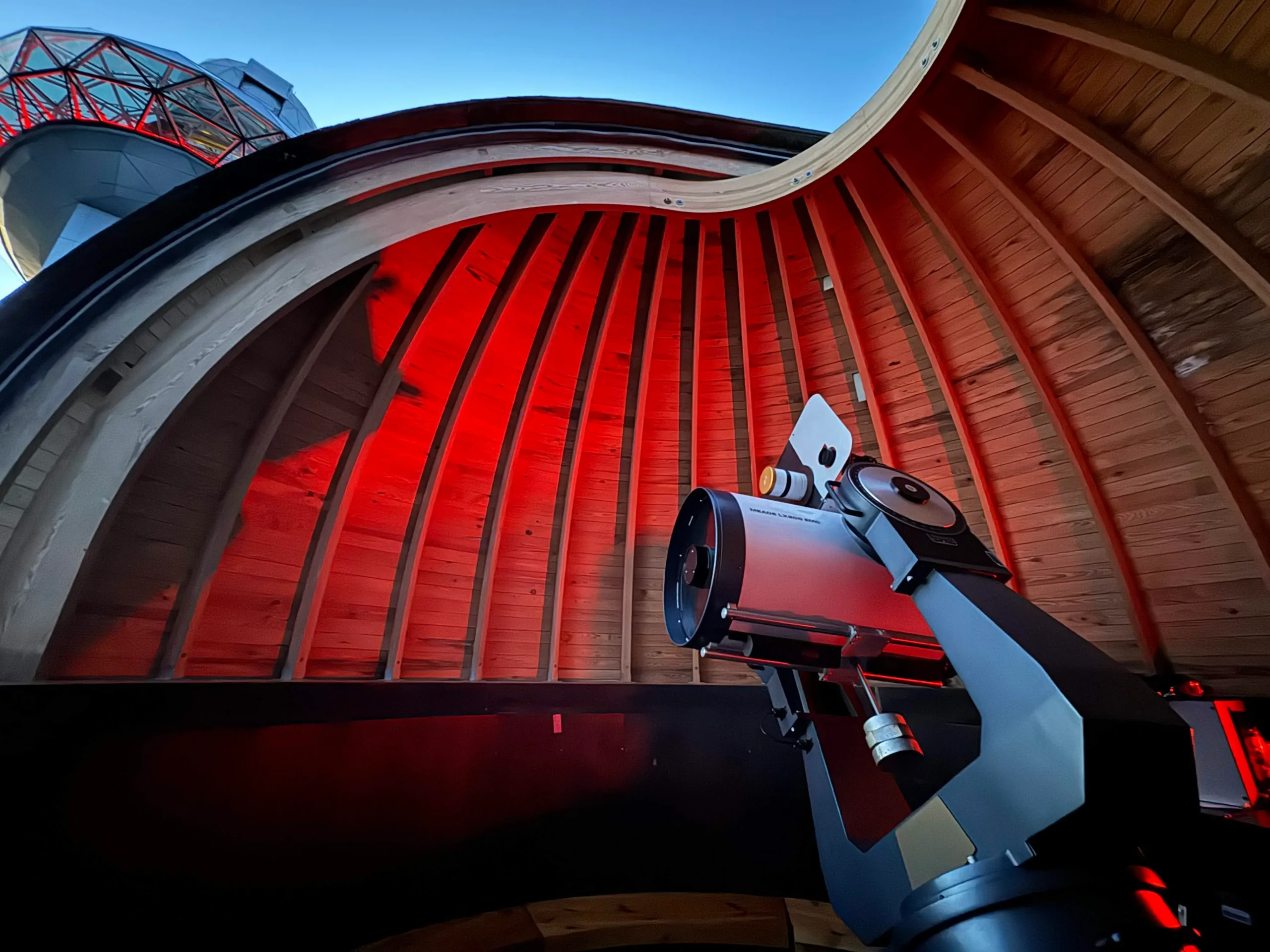
Night programs take place only under favorable weather conditions – clear skies.

Final confirmation or program cancellation will be communicated by 14:00 on the scheduled day via SMS or phone call.

To register a group of 18 or more people, please contact us registracija@lemuziejus.lt arba +370-615-20688.

Select a timeslot

2026 March 30 - 5 d.
30
M
31
T
1
W
2
T
3
F
4
S
5
S
Language (2)
Participants
This day is calm in the cosmos – please choose another date.

You might also like

No events on the selected date
A unique opportunity to observe processes taking place on the surface of our nearest star—the Sun—using dedicated solar telescopes. Participants review the latest data from solar observation satellites and learn about solar activity cycles and aurora phenomena. Duration: 45–60 minutes. Group size: Up to 18 participants.
No events on the selected date
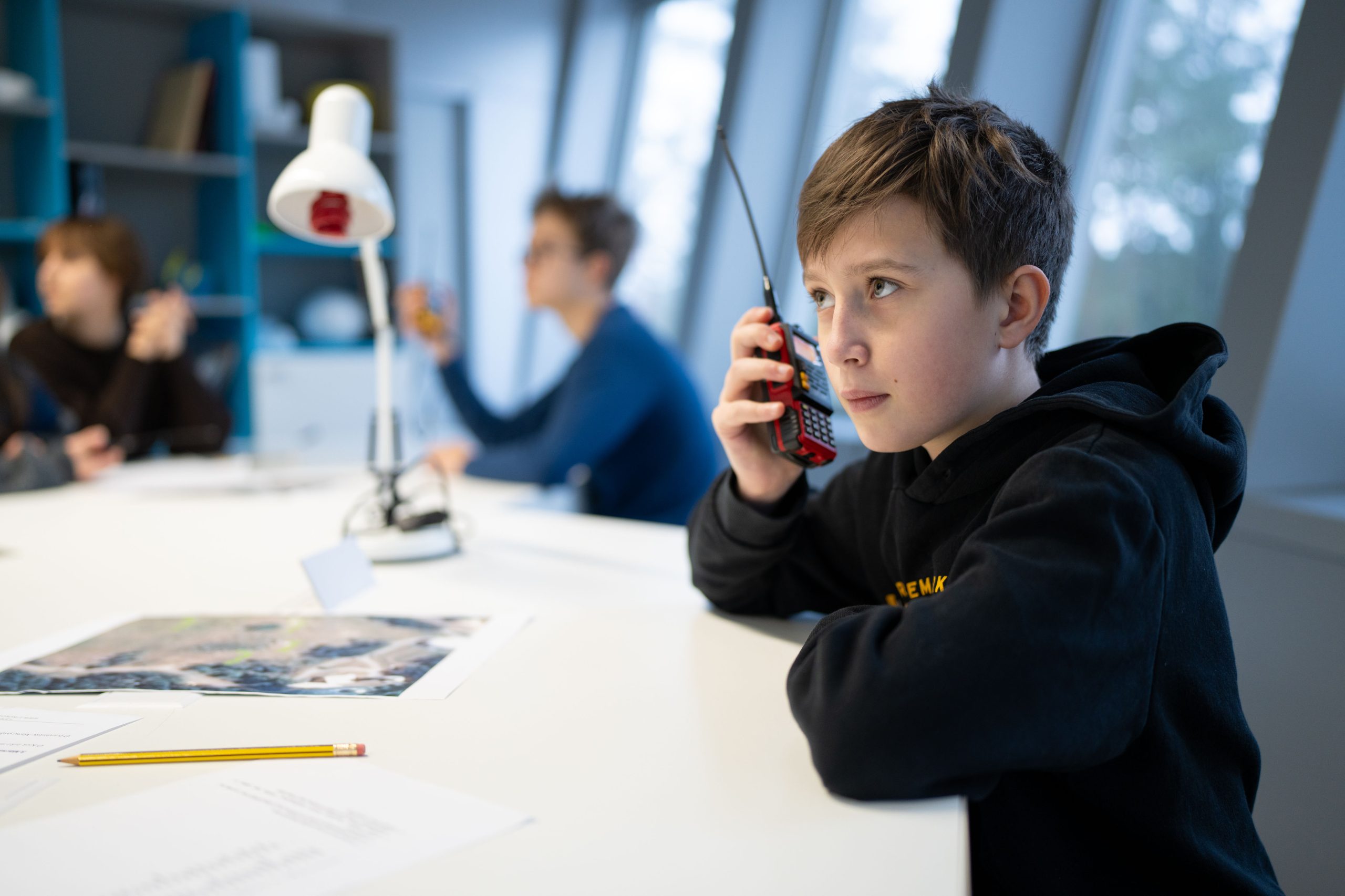
Participants learn how to communicate using radio walkie-talkies. The programme takes place both indoors and outdoors, with tasks involving the Solar System model in the museum’s outdoor exhibition. Participants are introduced to the principles of electromagnetic wave propagation and test radio communication equipment. Working in teams, “Mission Control” remains in the classroom while “astronauts” explore the outdoor exhibition to locate information, communicating via radios. The programme concludes with a group discussion and task review. Duration: 45–60 minutes. Group size: Up to 30 participants.
No events on the selected date